

Why Your Tropical Plants Won't Flower Indoors (And How a Living Wall Changes That)
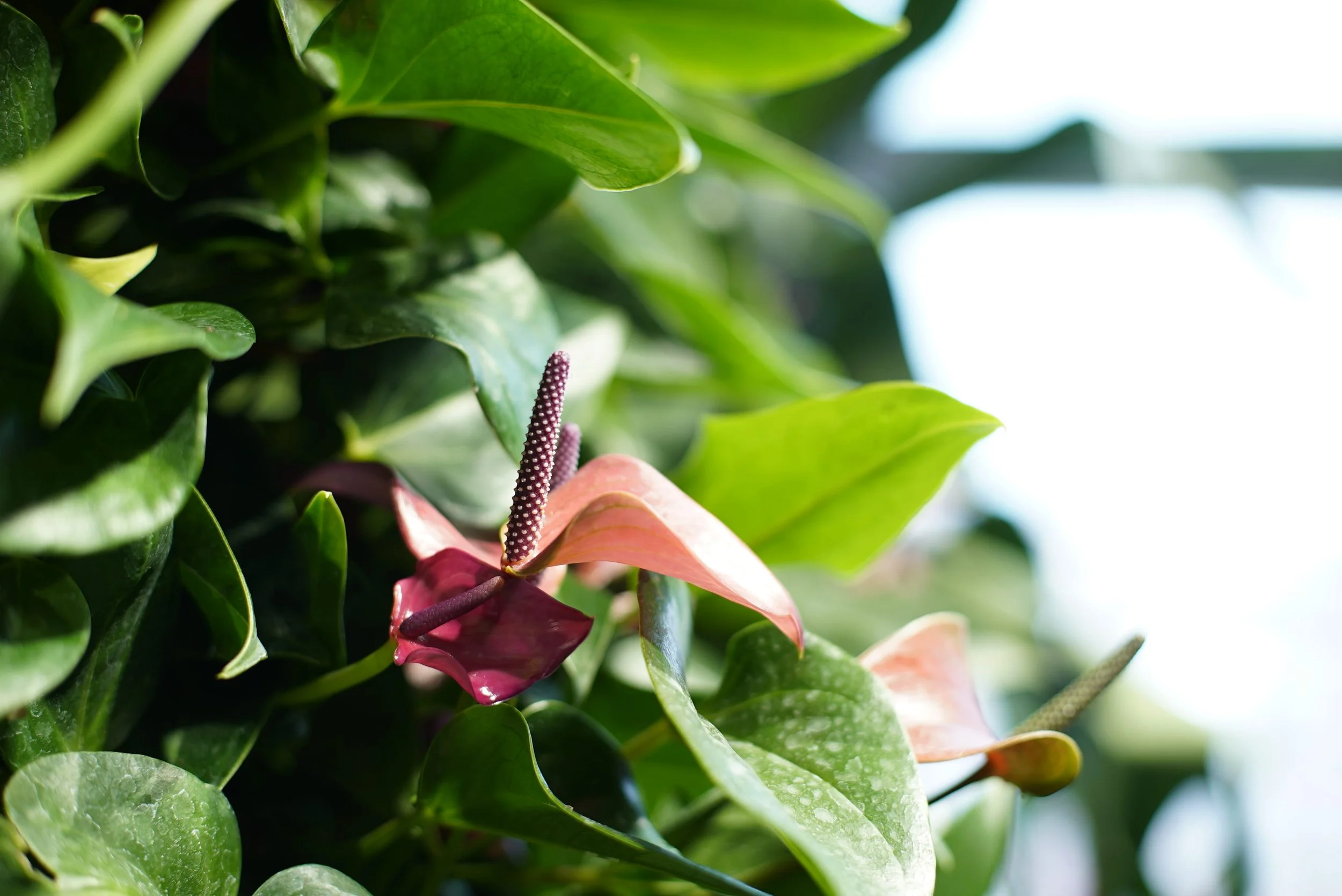
A flowering Anthurium adds vibrant color to an indoor living wall in a boutique hotel in Soho, Manhattan…living proof that biophilic design belongs in high-end hospitality spaces. Photo credit: Alan Burchell, Urbanstrong
Table of Contents Show
In nature, most of the tropical plants that we plant enthusiasts love to grow regularly produce fruit. These fruits are not always edible, such as the berries of the Chinese Evergreen (Aglaonema), but getting a tropical plant to flower and fruit indoors can feel like a badge of honor. It is proof that you have successfully recreated the ideal environmental conditions the plant experiences in the wild.
Here at Urbanstrong, we have personally observed levels of maturation in our clients' living walls that we have never seen in traditional potted plantings - larger leaves, thicker stems, extensive aerial root systems, and even inflorescences far earlier than expected indoors. In some cases, species that rarely flower in pots begin exhibiting mature reproductive growth once established on a living wall system.
The reason comes down to the environment. Tropical plants naturally grow in warm, humid, layered rainforest environments where their roots can spread freely and climb surrounding trees. When grown in traditional pots, many of these plants lack the environmental triggers needed for full maturation, flowering, and fruiting. Restricted root systems, inconsistent moisture, and limited vertical growth can all slow down development.
Living walls offer a much closer imitation of the rainforest ecosystem that tropical plants evolved in. By recreating these natural growing conditions, an indoor living wall can dramatically improve plant health, maturation rates, and the likelihood of flowering and fruit production.
Why Tropical Houseplants Fruit More Successfully in Nature
Most popular tropical houseplants originate in rainforests in Southeast Asia, Africa, and South America. In these ecosystems, many species grow epiphytically, meaning they grow on the surfaces of trees and larger plants rather than directly in soil.
This climbing growth habit provides several major benefits:
Better airflow around roots
Consistent access to moisture and humidity
Greater root expansion
Increased exposure to light as the plant climbs upward
Stronger structural growth and maturation
As tropical plants mature naturally in the canopy, they become more likely to flower and produce fruit. In many species, vertical growth and unrestricted rooting are directly tied to reproductive maturity.
Traditional pots simply cannot recreate these conditions effectively.
The Limitations of Growing Tropical Houseplants in Pots
Potted tropical plants often survive and grow indoors, but growth and maturation are very different things.
Containers inherently limit root spread and root strength. Over time, roots become compacted, reducing nutrient uptake and slowing overall growth. Inconsistent watering cycles also create periods of dryness that many rainforest species never experience in nature.
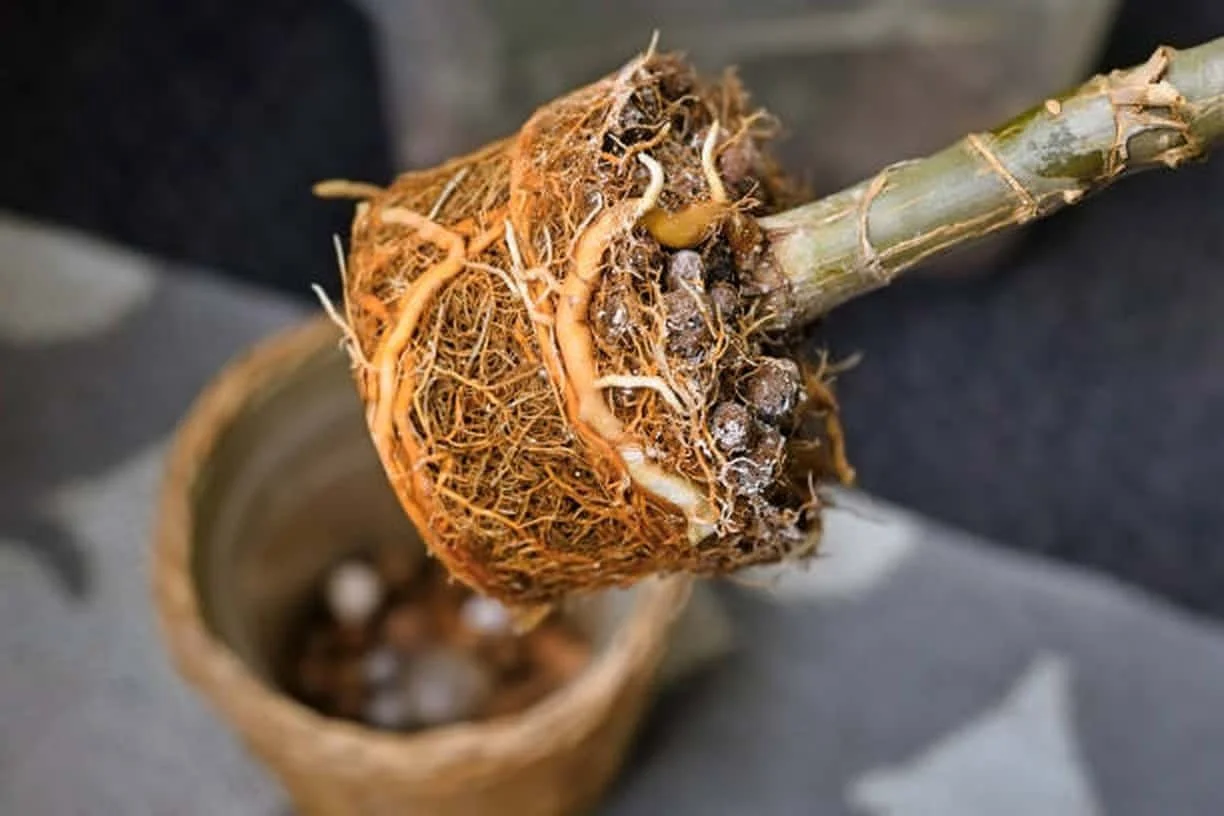
A classic example of a root-bound plant: the root system has filled and taken the shape of the container, limiting further growth and nutrient uptake. This is one of the most common reasons tropical houseplants stall in pots and never reach flowering maturity.
This restriction can prevent plants from reaching the maturity necessary for flowering and fruiting. Even healthy-looking plants may remain in a juvenile state for years when confined to pots.
Some common issues with potted tropical plants include:
Root binding
Reduced humidity around foliage
Uneven moisture retention
Slower vertical climbing growth
Delayed or absent flowering
Smaller leaf size and weaker stems
For collectors interested in mature growth forms and natural plant behavior, pots can become a limiting factor.
How an Indoor Plant Wall Improves Fruiting and Maturation
Some living wall constructions provide a far more natural environment for epiphytic and climbing tropical plants. At Urbanstrong we construct an open growing area; instead of being confined to a single container, roots can spread throughout the entire surface area of the wall. Some living wall constructions implement individual container planting, and these do not provide the same benefits to the roots. They provide the same root restriction as typical potted plantings.
This freedom allows plants to develop stronger, thicker root systems with improved nutrient and water uptake, supporting larger foliage, greater overall plant stability, and faster maturation. The vertical orientation of a live wall also mimics how these plants naturally climb trees in the rainforest, often encouraging larger leaves, thicker stems, fenestrations, aerial roots, and more mature foliage forms that are rarely seen in confined potted conditions.
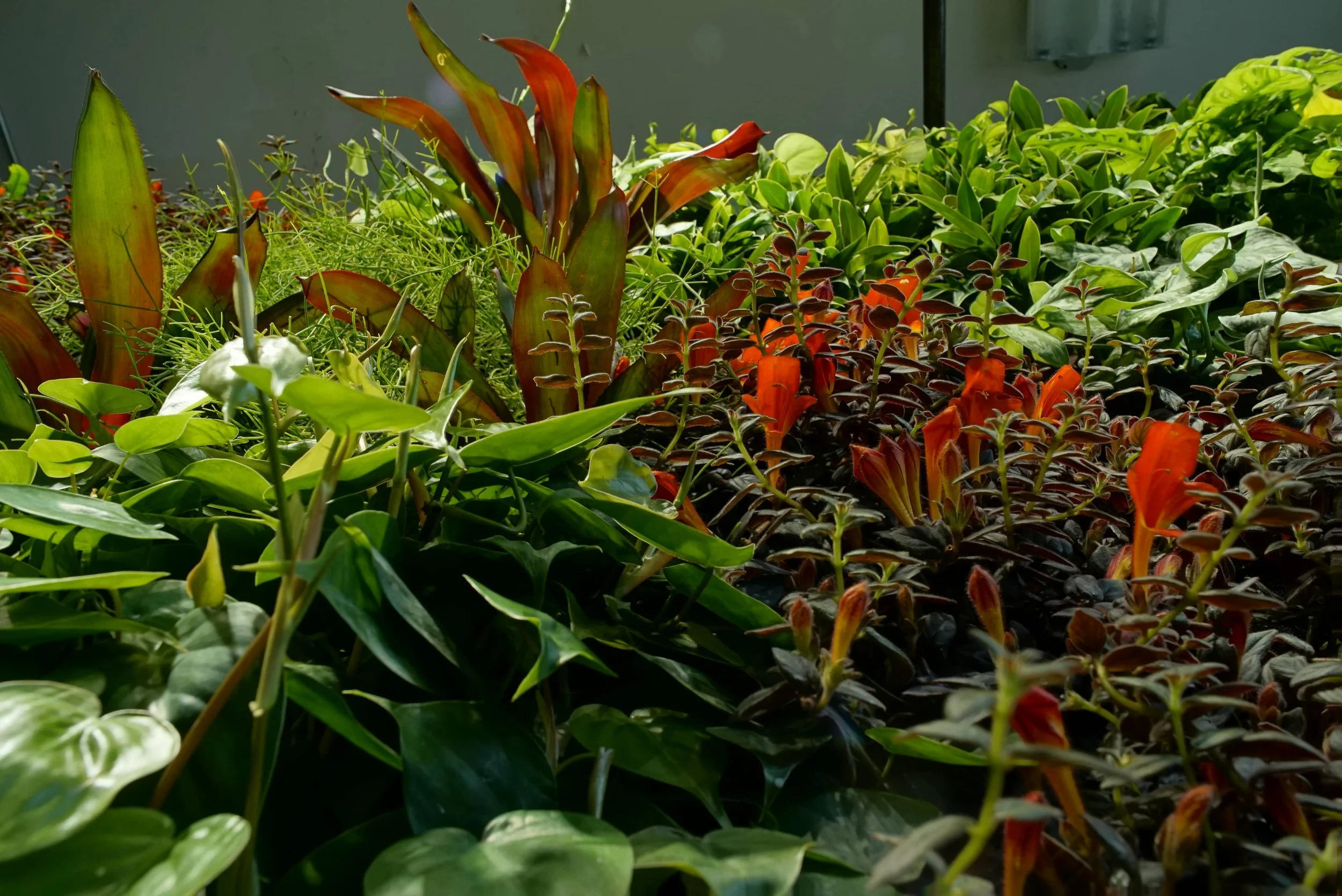
Tropical houseplants flourishing on an Urbanstrong indoor living wall. The roots spread freely across the entire growing surface rather than confined to individual containers, allowing plants to reach the maturity needed to flower reliably indoors. This is what an open root system looks like in practice. Photo credit: Alan Burchell, Urbanstrong
Living walls also help maintain more stable humidity and moisture levels compared to traditional pots. Many tropical plants evolved in rainforest environments where moisture and humidity remain relatively constant year-round, so the cycles of drying out and rewatering common in potted setups can create stress. By maintaining more even moisture levels and localized humidity around the root zone and foliage, an indoor green wall better replicates the conditions these plants naturally experience in the wild. This consistency allows plants to focus more energy on maturation and reproductive growth rather than simple survival.
As tropical plants become more mature and environmentally stable, flowering becomes significantly more likely. Fruiting naturally follows successful flowering and pollination, making environmental consistency one of the most important factors for indoor fruit production.
Thinking about a plant wall for your lobby, office, hotel or restaurant? Get in touch to explore what a professionally installed living wall could do for your space.
How NYC Living Wall Designers Use Scent: Our Mitsubishi HQ Case Study
In 2022 Urbanstrong designed and installed a 275 square-foot indoor living wall for Mitsubishi's new North American corporate headquarters in Times Square, New York City. It spans two floors and runs parallel to a large internal open-air stairwell. The goal was to give employees and guests more reasons to actually interact with the garden, not just walk past it. So beyond keeping a lot of species within arm's reach, we built sensory zones into the design. This meant sections planted specifically for what they smell like when in bloom. One species releases a subtle chocolate cake scent at flowering time. Others were chosen for pink-toned blooms to tie into the space's design palette.
One of the tropical houseplants we leaned on for a dazzling visual effect was Columnea 'Chocolate Soldier,' a goldfish plant cultivar named for its dark, fuzzy, chocolate-brown leaves. The bright orange tubular flowers have that curved, gaping shape the genus is known for, and they show up strongly against the dark foliage that makes this cultivar distinct from more common green-leaved Columnea varieties.

Columnea 'Chocolate Soldier’ plant flowering on an indoor living wall by Urbanstrong at Mitsubishi’s HQ in Times Square. Photo credit: Alan Burchell, Urbanstrong
Getting Columnea to flower reliably indoors is notoriously difficult. Most interior environments don't provide the light, humidity, and root conditions these plants need to bloom consistently. This is why a lot of indoor plantings end up as foliage only. Our indoor living wall systems are built to solve exactly this problem. The substrate, irrigation, and lighting conditions we engineer into each installation replicate what these tropical plants need closely enough that species like 'Chocolate Soldier' don't just survive, they flower on a reliable cycle. That's what let us use it as a functional design element at Mitsubishi rather than a decorative gamble, delivering the color the design called for.
It's a good example of what separates an indoor plant wall that looks good on installation day from a live wall that performs for years. Plant selection has to account for bloom behavior, scent, and color as design tools, not just greenery.
Working on a commercial or hospitality space? Get in touch to explore what a professionally installed indoor living wall could bring to your environment.
How an Urbanstrong Indoor Living Wall in Tribeca Did the Nearly Impossible
One of the most striking examples of what an Urbanstrong indoor living wall can unlock happened at a private residential indoor living wall installation we designed and built in Tribeca, New York City. Philodendron billietiae, a rare climbing aroid native to the rainforests of Brazil, French Guiana, and Guyana, is considered by horticulturalists to be almost unheard-of as a bloomer indoors. Most specimens grown in pots never reach the reproductive maturity required to flower, regardless of how well they are cared for. The environmental triggers simply aren't there.
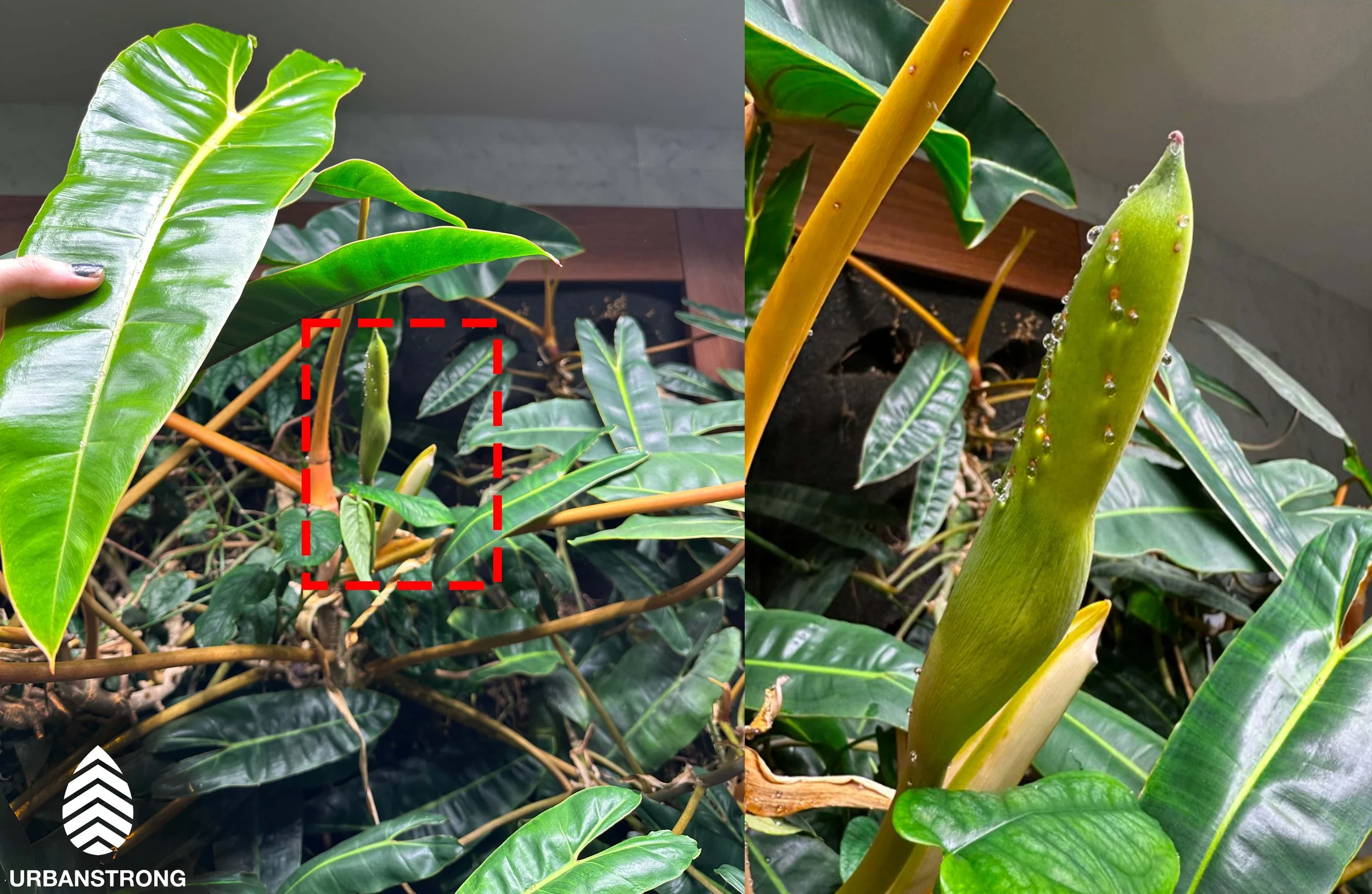
Philodendron billietiae in bloom on an Urbanstrong indoor living wall in Tribeca, NYC. This rare tropical houseplant almost never flowers indoors in traditional pots. Urbanstrong's Living Wall Maintenance team has documented five separate blooms on this installation over 18 months. A testament to what an open-root indoor living wall system can unlock that a container simply cannot. Photo credit: Zada Hathaway, Urbanstrong
Yet on this Urbanstrong living wall installation, the plant bloomed within less than a year of installation. Urbanstrong's living wall maintenance team has since documented five separate blooms over the past 18 months and counting. The open root system, consistent humidity, vertical climbing support, and engineered irrigation conditions of our indoor living wall gave this plant everything it would experience climbing a rainforest tree in the wild. And it responded accordingly, magnificently.
For our team, and especially for our Lead Green Wall Specialist Zada, moments like this are exactly what this work is about. Getting a tropical houseplant to flower indoors is a badge of honor. Getting a Philodendron billietiae to do it five times on an Urbanstrong indoor plant wall in a Tribeca apartment is something else entirely.
What are the Best Tropical Plants for an Indoor Living Wall?
Here at Urbanstrong, we prioritize species that naturally grow epiphytically and thrive when given vertical space and consistent humidity. The genera we return to most often in our plant palettes include:
Philodendrons
Monstera
Anthuriums
Epipremnum
Rhaphidophora
Hoya species
Tropical ferns
Orchids
Shingling plants
Creating the Ideal Indoor Green Wall Environment for Fruiting Tropical Plants
If your goal is flowering or fruiting indoors, environmental consistency is very important. A biophilic design approach (one that actively reconnects plants to the conditions they evolved in) is exactly what a well-constructed indoor plant wall delivers. Living walls can dramatically accelerate tropical plant maturity by combining the factors these plants need most into one system: stable temperatures, consistent humidity and moisture, improved airflow, expanded root space, and vertical support for natural climbing growth. Paired with proper lighting and fertilization, the results can be remarkable.
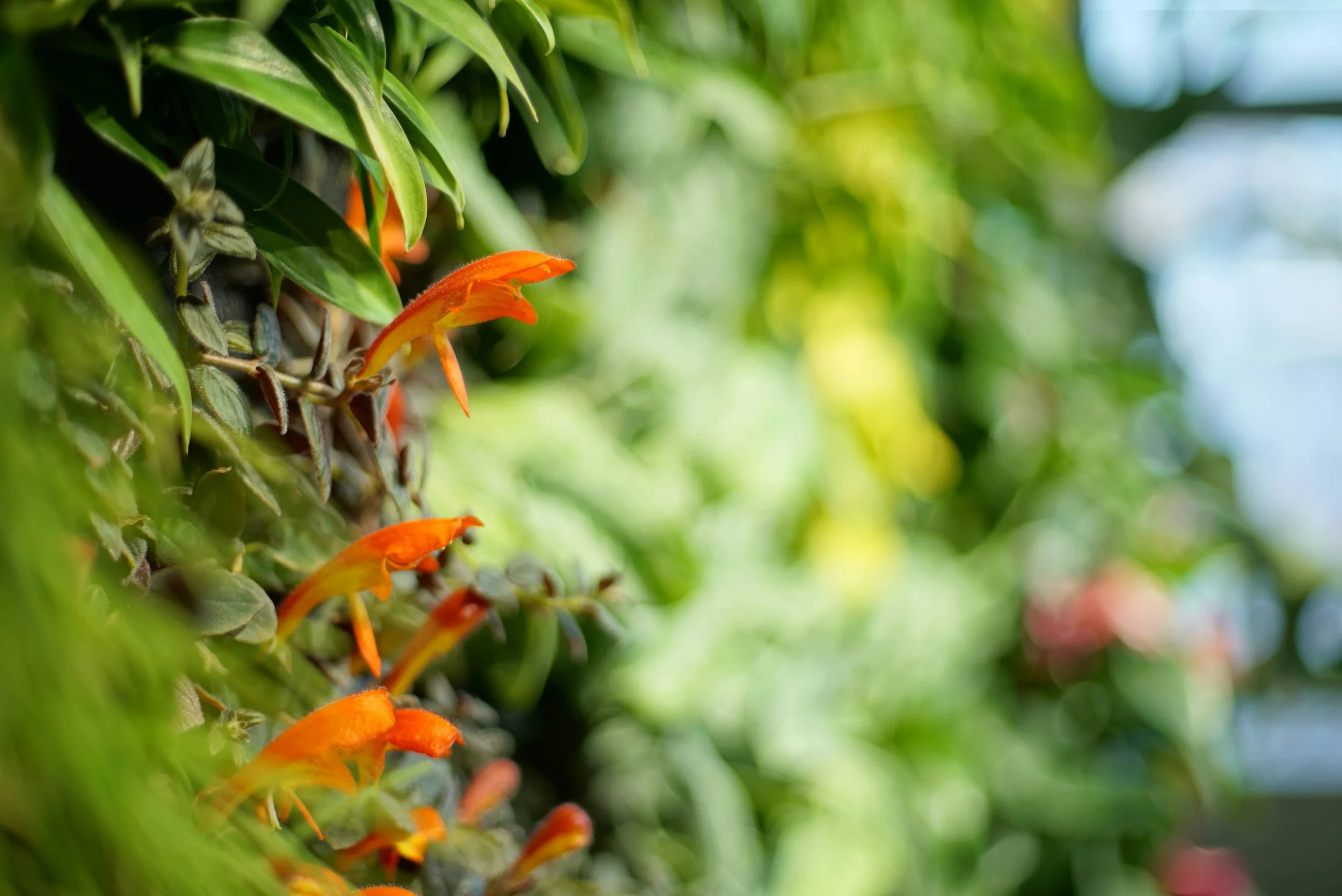
Columnea 'Chocolate Soldier' flowering on an Urbanstrong indoor living wall installation. This tropical houseplant rarely blooms in pots but flowers reliably when given the root space, humidity, and vertical support of a professionally installed live wall system.
Ready for a Professionally Installed Indoor Living Wall in NYC?
For tropical plant enthusiasts, flowering and fruiting are some of the most rewarding signs of successful cultivation. While traditional pots can sustain many species, they often fail to recreate the environmental complexity that tropical plants require to fully mature.
Living walls bridge that gap by mimicking the natural rainforest habitats these plants evolved in. By allowing roots to spread freely, maintaining stable humidity, and encouraging vertical growth, a professionally installed indoor living wall can unlock growth patterns rarely seen in conventional indoor setups.
If your goal is to grow larger, healthier, and potentially fruiting tropical plants indoors, a live wall may be one of the most effective tools available.
Fill out this quick form to explore what a professionally installed living wall could do for your space, whether that's a commercial lobby, a biophilic office environment, or a private residence.
We look forward to helping you understand your options.
About the Author
Zada Hathaway is Urbanstrong's Lead Green Wall Design, Build, Install, and Maintenance Specialist. She has several years of experience overseeing living wall and moss wall projects from concept through ongoing plant care.
Before joining Urbanstrong, Zada worked in the horticulture industry in San Francisco, teaching large classes and events on plant science, care, and design, alongside hands-on moss wall building and fabrication work. She draws on that botanical background to understand exactly what each living wall needs to thrive long after installation, from light and humidity requirements to routine maintenance.
Zada is happiest making things with her hands, whether she's at work or at home, and outside of Urbanstrong she enjoys knitting, biking, and watching her pet rats get into mischief. Her plant collection leans tropical and unusual: Hoyas, Rhipsalis, and carnivorous varieties, especially Drosera, Pinguicula, and Utricularia.